Guest article
Solid or Engineered Wood? A Practical Flooring Guide for UAE Homes
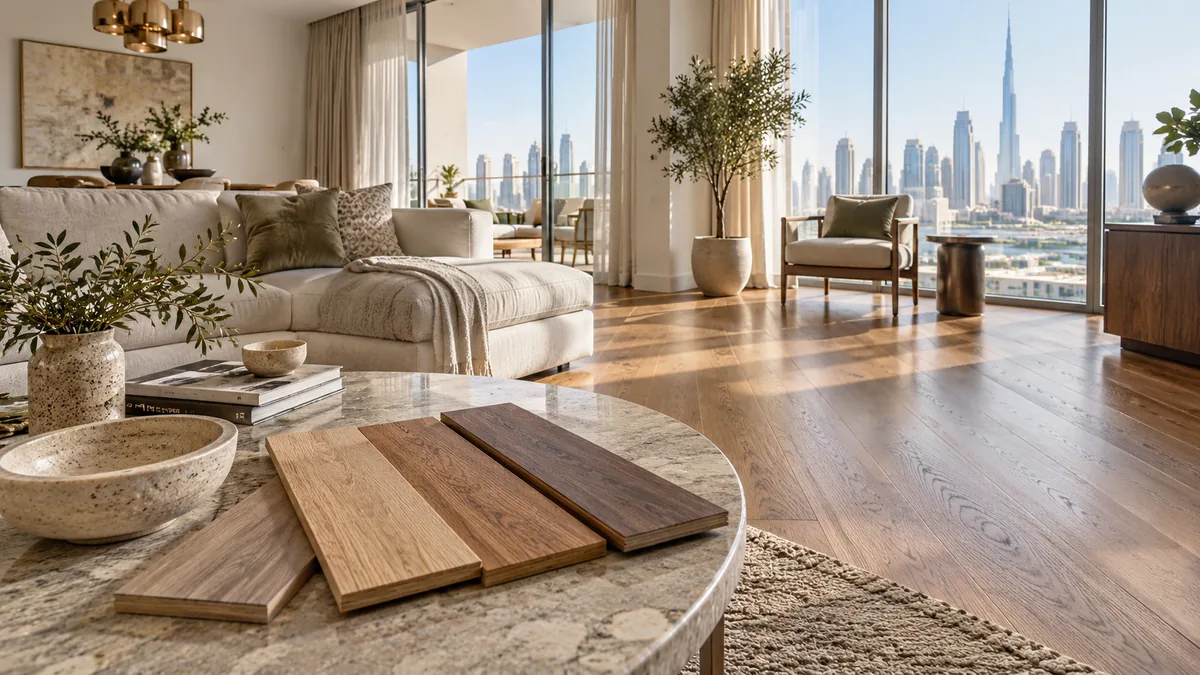
Choosing a timber floor is not simply a question of picking the colour or grain that looks best in a showroom. The construction of the floor, the condition of the room, the subfloor and the way the property is cooled can all affect how that floor performs after installation.
That matters in the UAE, where homes may experience humid outdoor conditions while air conditioning creates a much cooler and drier indoor environment. Villas, apartments and commercial interiors can also differ considerably in subfloor condition, sunlight exposure and everyday traffic.
For homeowners deciding between solid hardwood and engineered wood, the useful question is therefore not “Which one is better?” but “Which construction makes more sense for this particular room?”
Why Indoor Conditions Matter With Real Wood Floors
Wood is a hygroscopic material, meaning it exchanges moisture with the surrounding air. As its moisture content changes, it can expand or contract to some degree.
That behaviour is normal. Problems usually arise when the floor experiences conditions outside what its construction, installation system or manufacturer was designed to tolerate.
In a UAE property, several factors deserve attention:
indoor temperature and humidity stability
direct sunlight through large windows
moisture in the concrete or screed below the floor
ground-floor versus upper-floor installation
room use and cleaning habits
air-conditioning patterns
installation method
the wood species and plank dimensions
This is why flooring should be selected as part of the room specification rather than treated as a purely decorative finish.
Solid Hardwood and Engineered Wood Are Not the Same Product
Both options can provide a genuine wood surface, but their construction is fundamentally different.
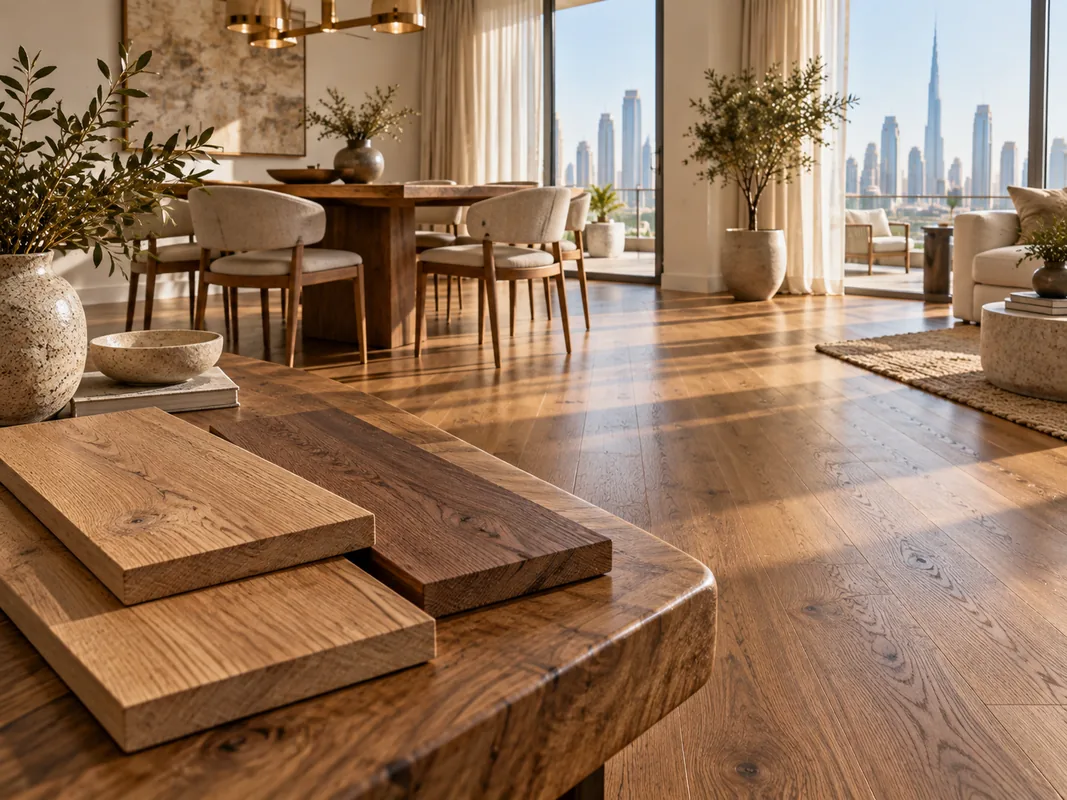
Solid Hardwood
Solid hardwood flooring is manufactured from a single piece of timber through the thickness of the board. Depending on the product, it may be supplied in different wood species, grades, plank widths and surface finishes.
The appeal is straightforward: the material is authentic throughout. Natural variation in grain, knots and tone becomes part of the character of the finished floor.
Because more usable timber may be available above the tongue-and-groove system, some solid floors can also be sanded and refinished several times during their service life. The actual number depends on the board construction, condition and previous sanding, so it should never be assumed without checking the product.
For dry, controlled interiors where the homeowner values traditional material construction and long-term restoration potential, hardwood flooring can be worth considering. It is particularly important, however, to confirm suitable indoor conditions and installation requirements before choosing wide boards or more moisture-sensitive applications.
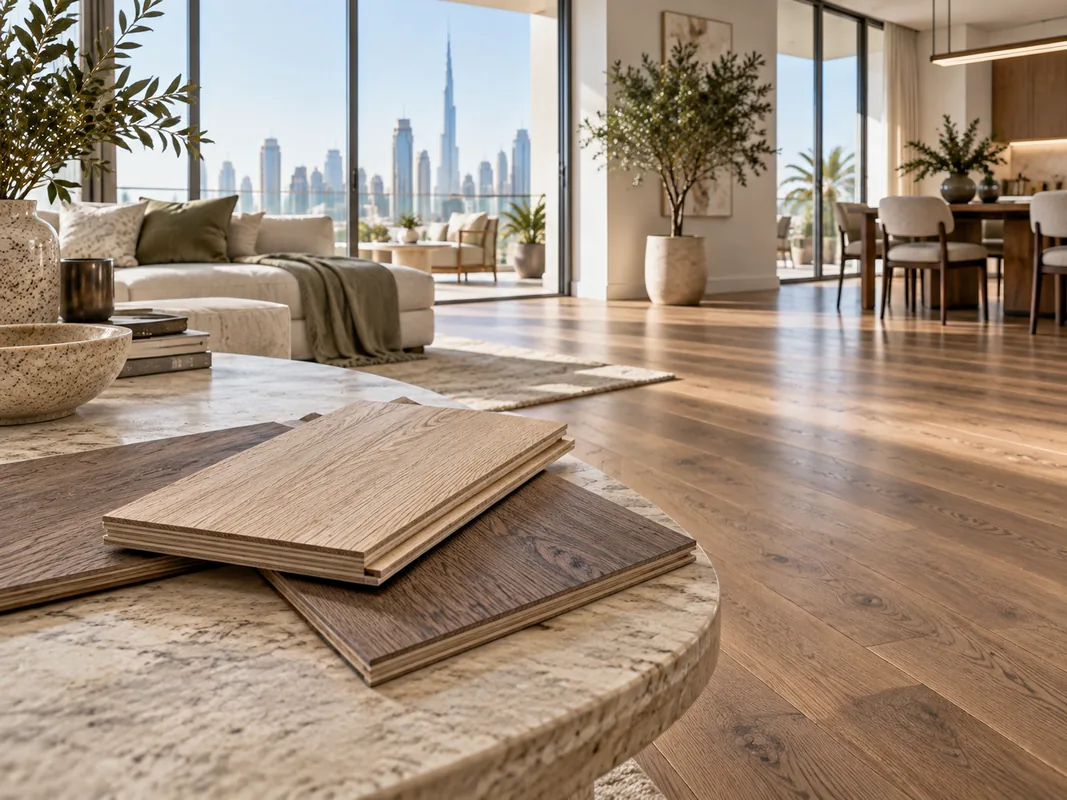
Engineered Wood
Engineered flooring takes a different approach. Instead of using one solid piece of timber throughout, it normally combines a real hardwood surface layer with a multi-layer core designed to improve structural stability.
That construction does not make engineered flooring immune to moisture. It is still a wood-based product and still needs appropriate site conditions. What it can do is reduce some of the dimensional movement associated with changes in the surrounding environment.
This makes engineered wood particularly relevant when stability is an important part of the specification, including many modern apartments, villas and renovation projects where the installer needs to balance the appearance of natural timber with practical construction considerations.
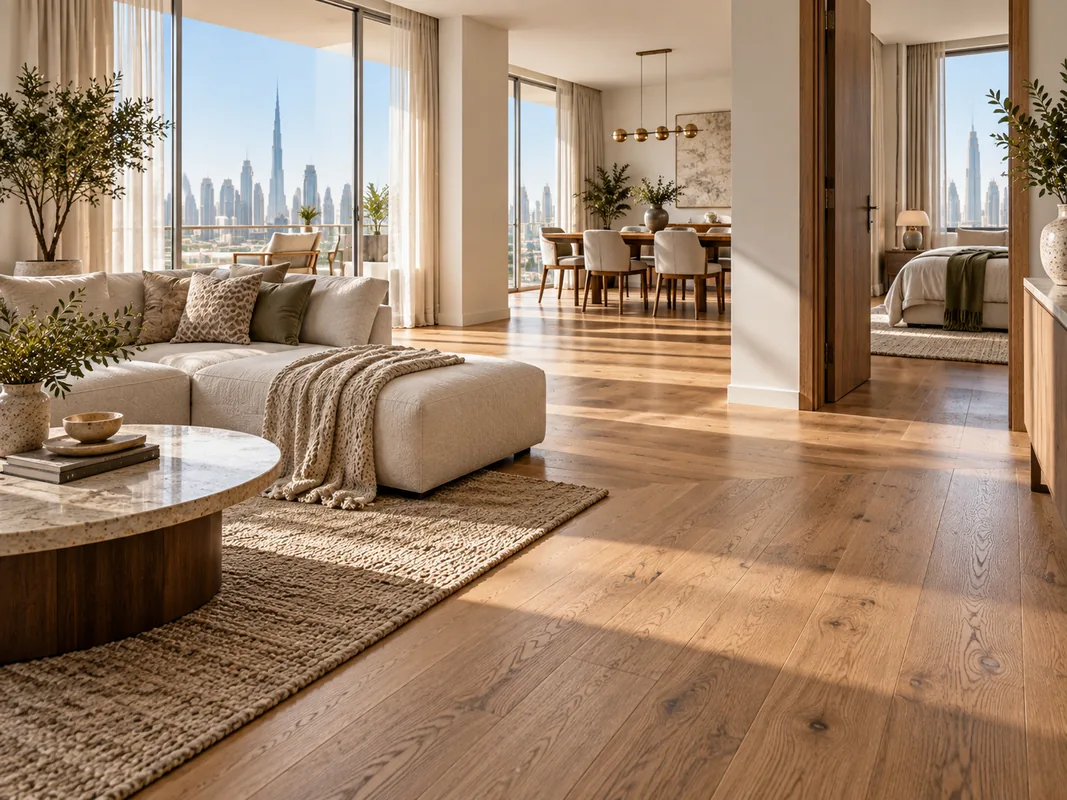
Which Option Makes More Sense for Different Rooms?
Neither material should automatically be specified throughout an entire property.
A better approach is to evaluate each room separately.
Situation | What to Consider |
|---|---|
Living room | Appearance, sunlight, traffic and stability |
Bedroom | Comfort, visual character and maintenance requirements |
Villa reception area | Plank size, traffic, design impact and subfloor preparation |
Apartment renovation | Existing floor level, subfloor condition and installation system |
Ground floor | Moisture testing becomes particularly important |
Kitchen or moisture-prone area | Confirm that the specific product and installation system are approved for the application |
Bathrooms and persistently wet areas require particular caution. A floor that contains real timber should not simply be assumed to be suitable because it has a durable surface finish.
Likewise, the word “engineered” should not be confused with “waterproof.” Those are separate performance characteristics.
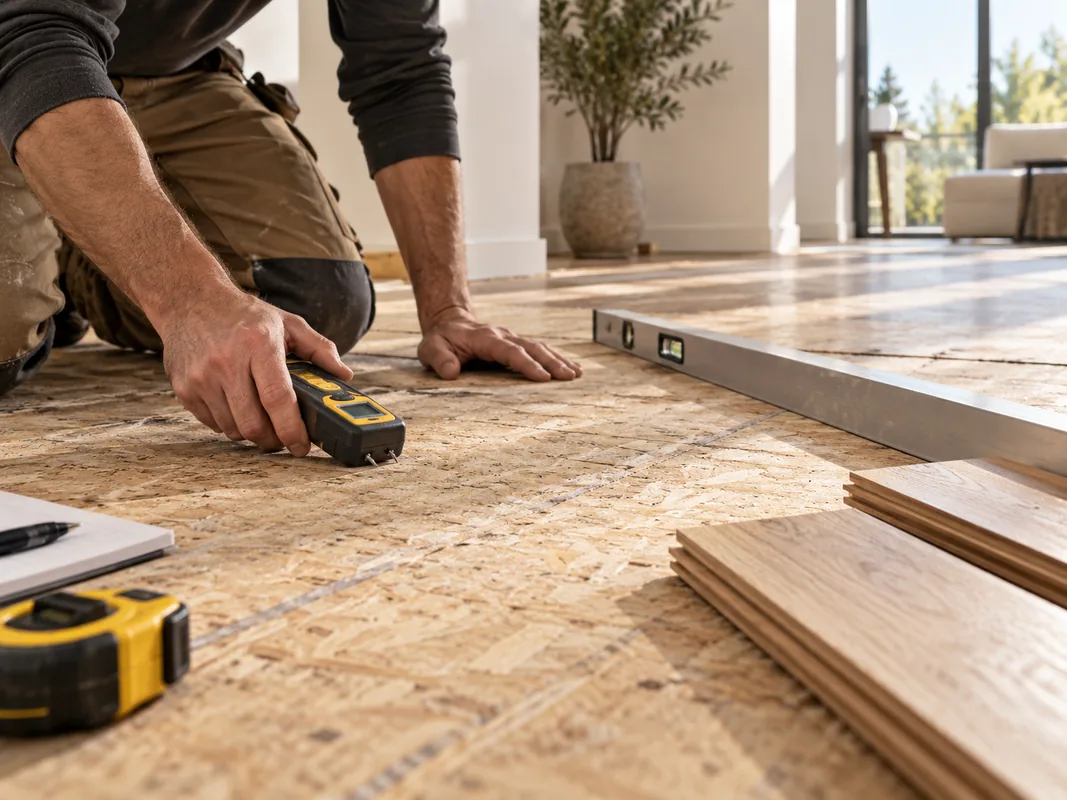
Do Not Choose Flooring Before Checking the Subfloor
One of the most expensive mistakes in a renovation is selecting the floor first and investigating the substrate later.
Concrete and screed can contain moisture even when the surface appears dry. Existing floors can also hide level differences, cracks, contamination or previous adhesive residue.
Before installation, the contractor may need to assess:
subfloor moisture
flatness and level
surface strength
existing coatings or adhesives
required floor height
transitions to neighbouring rooms
skirting and door-clearance requirements
The appropriate tests and acceptable values depend on the flooring system, adhesive, substrate and manufacturer instructions.
Skipping those checks can create problems that are incorrectly blamed on the flooring material itself.
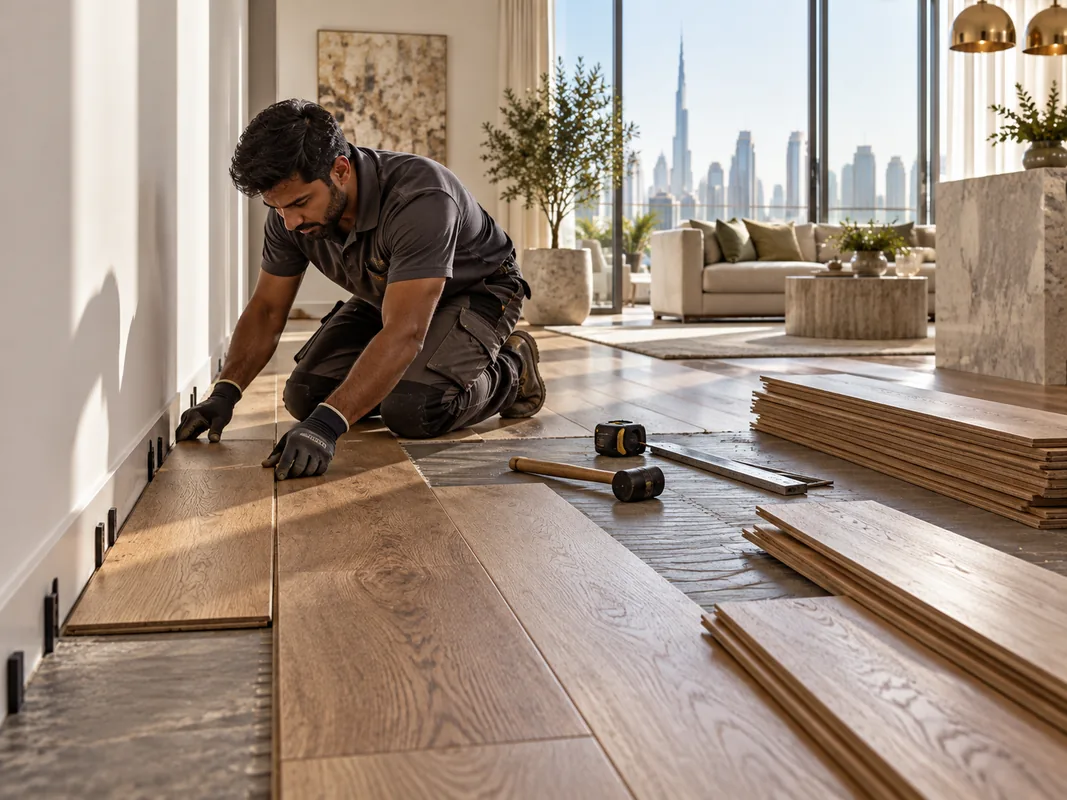
Installation Quality Can Matter as Much as Material Choice
A good timber floor installed badly is still a bad floor.
Expansion provision, adhesive selection, perimeter detailing, plank layout and moisture assessment all influence the final result. Some systems may be glued down, while others may allow different installation methods depending on the product.
Acclimation requirements also vary. There is no sensible universal rule such as “leave every wood floor in the room for exactly three days.” The correct approach is to follow the flooring manufacturer's instructions while checking that site conditions are suitable for installation.
The property's normal operating environment matters too. Installing timber in an unfinished space with the air conditioning switched off and then moving immediately to permanently cooled indoor conditions creates a very different environment around the wood.
For homeowners comparing suppliers of wood flooring in Dubai, the useful questions are therefore not limited to colour and price. Greenwood, for example, carries both solid and engineered flooring categories, so the more meaningful comparison is how a particular construction, finish and installation system fits the actual property.
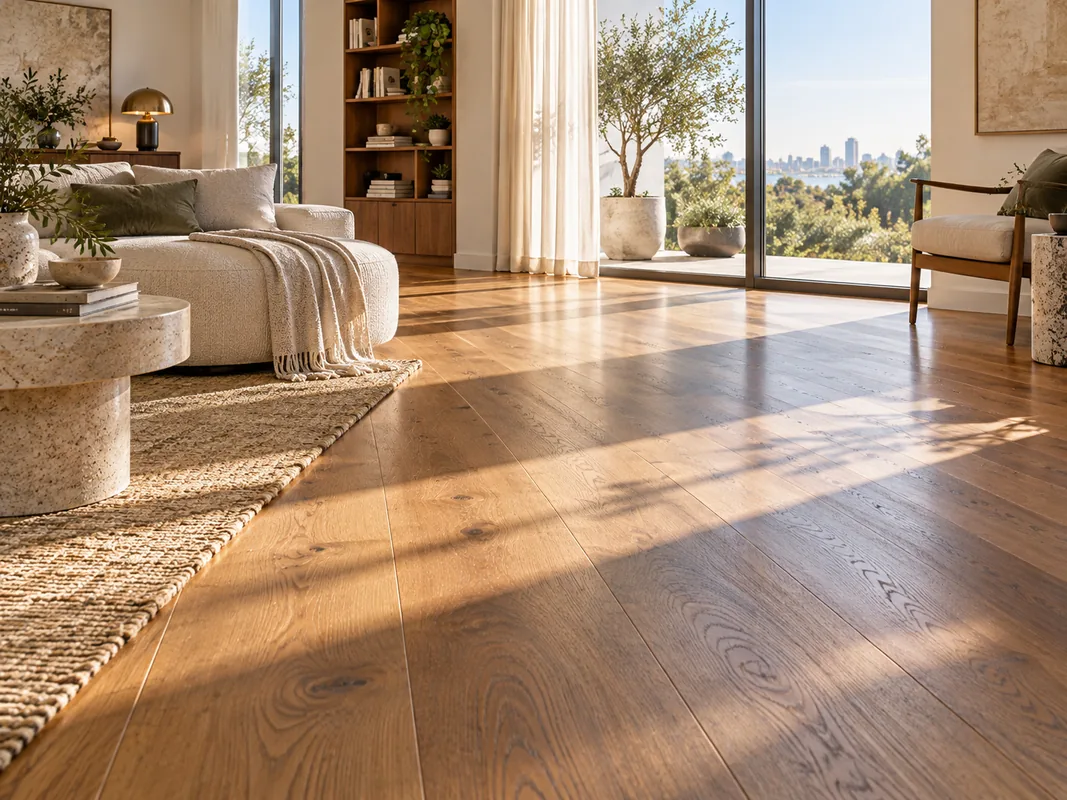
Think About Sunlight Before Choosing the Colour
Large windows are common in modern UAE apartments and villas, and strong daylight can influence how a timber floor looks over time.
Natural wood is not completely colour-stable. Different species and finishes can gradually change tone when exposed to light. Rugs and furniture may also shield particular areas, producing visible differences when they are eventually moved.
This is not necessarily a defect; it is part of the behaviour of a natural material.
Before choosing a very light or dark sample, look at it in the actual room if possible. The same timber can appear noticeably different under warm artificial lighting, cool lighting and strong daylight.
Curtains, blinds and UV-reducing glazing can also help manage intense direct exposure.
Maintenance Should Influence the Buying Decision
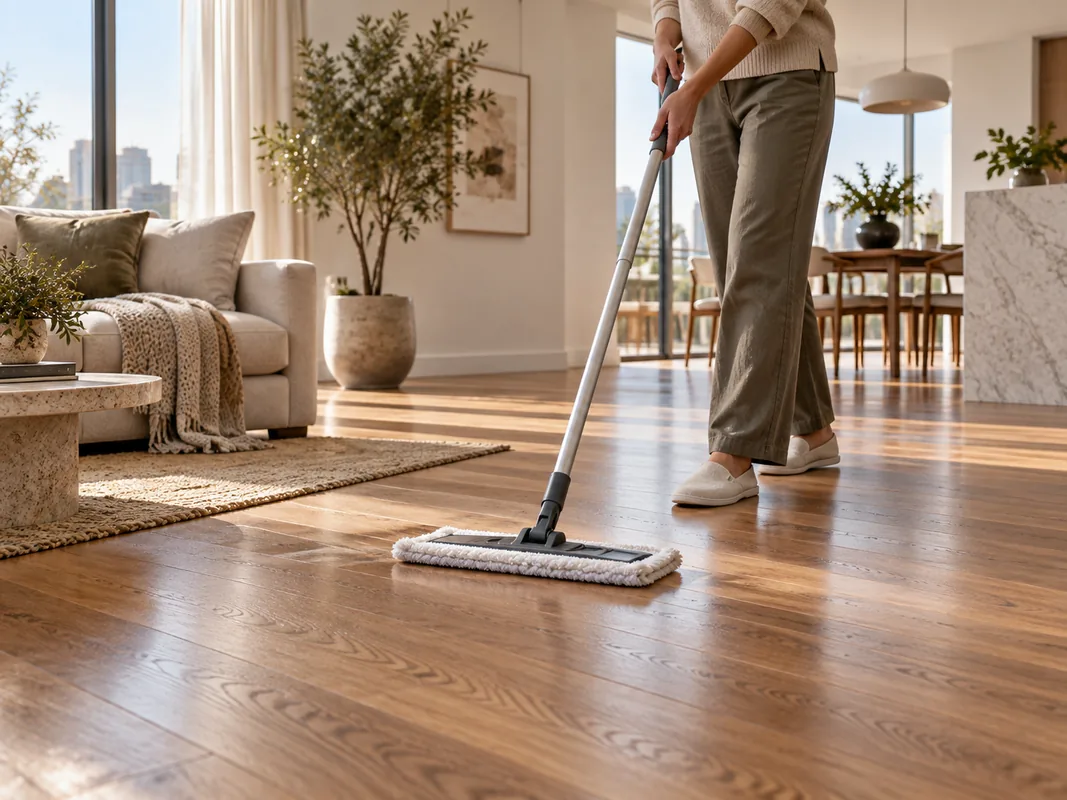
Real wood flooring generally benefits from relatively simple cleaning rather than aggressive treatment.
Loose dust, sand and grit should be removed regularly because abrasive particles can gradually mark the surface under foot traffic. In entrance areas, a properly placed mat can make a surprisingly large difference.
For routine care:
vacuum or dust-mop loose debris
wipe spills reasonably quickly
use cleaning products suitable for the floor's finish
avoid leaving standing water on the surface
use felt protectors beneath movable furniture
avoid dragging heavy items across the floor
A common mistake is assuming that more water means better cleaning. With timber flooring, excessively wet mopping can introduce unnecessary moisture into joints and edges.
The finish also matters. Oiled, lacquered and other factory-finished surfaces can have different maintenance requirements, so the product care instructions should be kept after installation rather than discarded with the packaging.
A Practical Checklist Before Ordering
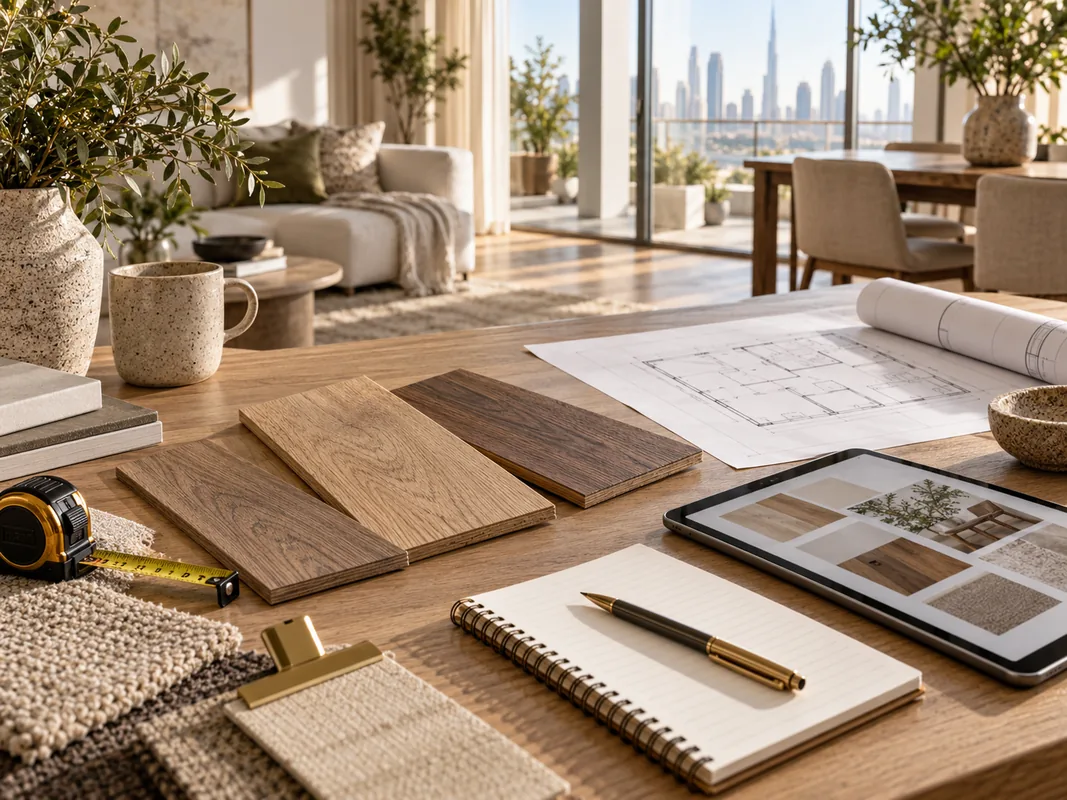
Before committing to either option, answer these questions:
Is the room consistently air-conditioned?
Is there any history of leaks or dampness?
Has the subfloor been properly assessed?
How much direct sunlight reaches the floor?
How heavy is the daily traffic?
Are pets or children likely to increase wear?
Does the homeowner expect a perfectly uniform surface or natural variation?
Is future refinishing important?
What installation method does the manufacturer specify?
Who is responsible for checking the site before installation?
If several of those questions cannot yet be answered, it is probably too early to select the final product.
The Better Floor Is the One Specified for the Room
Solid hardwood and engineered wood are not competing versions of exactly the same material. They are two different constructions designed to deliver the character of real timber in different ways.
Solid hardwood makes sense when authenticity, substantial timber construction and potential long-term restoration are priorities in a suitable, controlled interior. Engineered flooring becomes particularly useful when dimensional stability and installation flexibility carry more weight.
In either case, the successful result depends on more than the plank itself. Site moisture, subfloor preparation, indoor conditions, installation quality and routine maintenance all deserve attention.
Choose the construction first, confirm that it suits the room, and only then decide which colour and pattern looks best