Guest article
How to Choose the Right Electrical Cables for Commercial and Industrial Projects in UAE
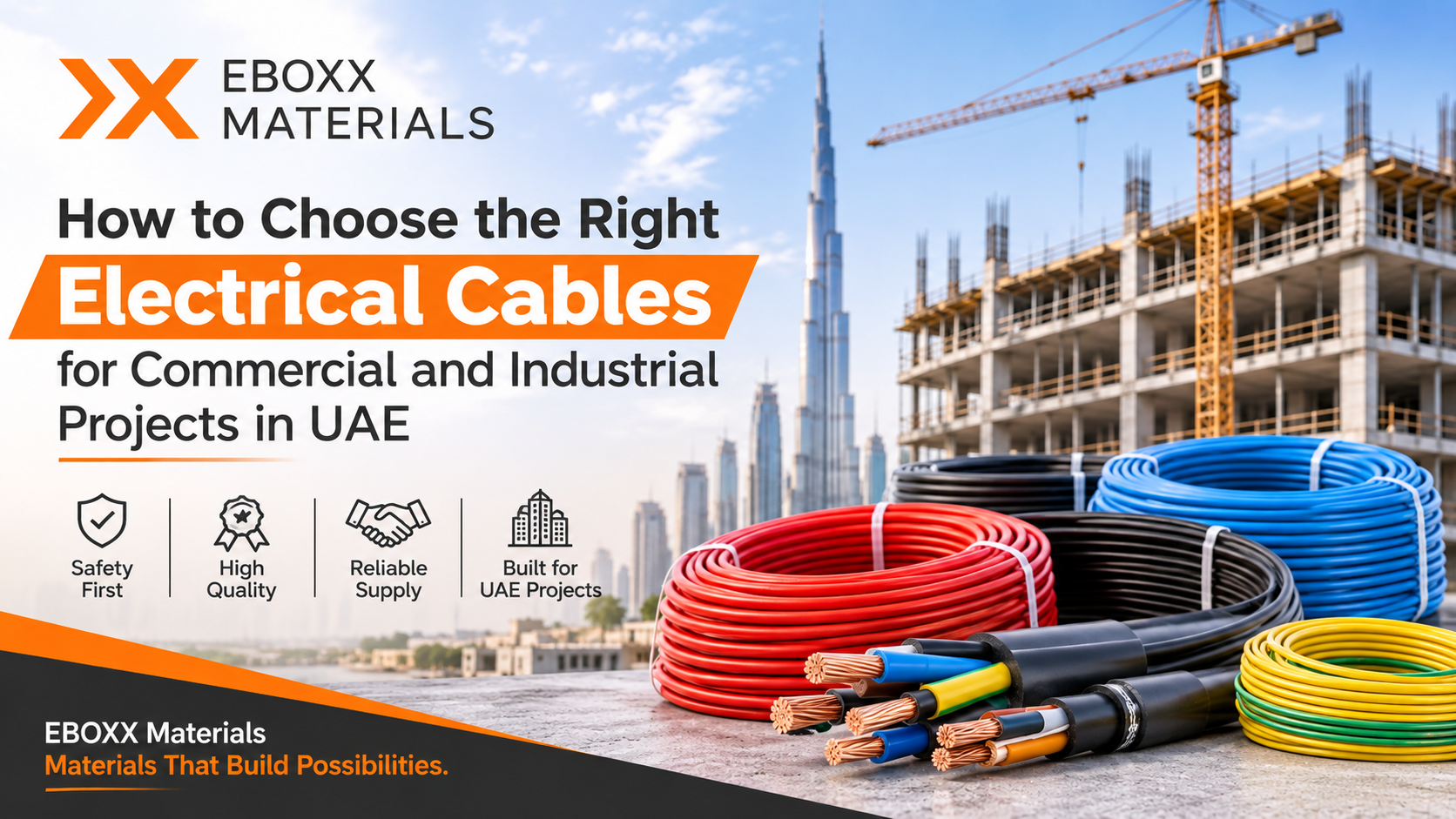
How to Choose the Right Electrical Cables for Commercial and Industrial Projects in UAE
Electrical cables are essential components of commercial buildings, industrial facilities and infrastructure projects. They support power distribution, control systems and electrical connections across different applications.
However, choosing the right electrical cable involves more than selecting a product based on size or price. Factors such as voltage requirements, installation conditions, conductor material, insulation type and project specifications must all be considered.
For contractors, electrical engineers, developers and procurement professionals in the UAE, understanding these factors can help make better purchasing decisions.
1. Understand the Different Voltage Categories
Electrical cables are available in different voltage categories depending on their intended applications.
The main categories include:
Low Voltage (LV) Cables: Commonly used for power distribution in residential, commercial and industrial installations.
Medium Voltage (MV) Cables: Used in electrical distribution networks and industrial power systems.
High Voltage (HV) Cables: Designed for high-voltage transmission and specialised power infrastructure applications.
The correct voltage category should always be selected according to the electrical system design and project specifications.
2. Choose the Appropriate Cable Insulation
Cable insulation protects conductors and helps ensure safe electrical operation.
Two commonly used insulation materials are:
XLPE (Cross-Linked Polyethylene)
XLPE cables are widely used in power distribution applications. They offer good thermal and electrical properties and are suitable for various industrial and infrastructure requirements.
PVC (Polyvinyl Chloride)
PVC-insulated cables are commonly used in building wiring and electrical installations. Their suitability depends on the cable design, operating conditions and application.
Choosing between XLPE and PVC requires consideration of the installation environment and technical requirements.
3. Armoured vs Unarmoured Cables
Another important consideration is whether a project requires armoured or unarmoured cables.
Armoured Cables
Armoured cables include an additional protective layer designed to provide mechanical protection. They are often considered for installations where cables may be exposed to mechanical damage or demanding environments.
Unarmoured Cables
Unarmoured cables do not include the same mechanical armour layer. They are commonly used in installations where suitable protection is provided through conduits, trunking or other installation methods.
The choice depends on the installation method, environmental conditions and project specifications.
4. Consider the Type of Cable Application
Different electrical systems require different cable types.
Some commonly used categories include:
Building Wires: Used for electrical wiring in residential and commercial buildings.
Flexible Cables: Suitable for applications requiring flexibility and movement.
Control Cables: Used for control circuits and equipment connections.
Instrumentation Cables: Designed for signal transmission and measurement systems.
Industrial Cables: Used in manufacturing facilities, machinery and industrial installations.
Fire-Resistant Cables: Designed to maintain circuit integrity for specified periods under defined fire-test conditions, depending on their certification and application.
Selecting the correct cable type helps ensure compatibility with the intended electrical system.
5. Check Technical Specifications Before Purchasing
Before ordering electrical cables, contractors and procurement teams should review important technical details.
These may include:
Voltage rating
Conductor material and cross-sectional area
Current-carrying capacity
Insulation and sheath material
Operating temperature
Installation conditions
Applicable standards and certifications
Cable length and quantity requirements
Cable sizing and selection should be carried out by qualified electrical professionals in accordance with applicable regulations and project specifications.
6. Why Reliable Cable Supply Matters for UAE Projects
Construction and industrial projects often operate according to strict schedules. Delays in electrical material procurement can affect installation work and overall project progress.
Working with a dependable supplier can help procurement teams coordinate their requirements more efficiently.
When choosing a cable supplier, consider:
Availability of different cable categories
Product specifications and technical information
Competitive project pricing
Reliable sourcing and delivery coordination
Responsive communication
Ability to understand project requirements
A reliable supply partner can support smoother procurement and help businesses identify suitable products for their applications.
EBOXX Materials – Your Building Materials Supplier in UAE
EBOXX Materials supports contractors, developers, businesses and procurement teams with a range of building and electrical materials for construction, industrial and infrastructure projects.
Our product range includes LV, MV and HV cables, XLPE and PVC cables, armoured and unarmoured cables, control and instrumentation cables, building wires, flexible cables and other electrical products.
We also supply a range of related categories, including cable accessories and management systems, switchgear, industrial plugs and sockets, pumps, solar products, earthing and lightning protection, wiring accessories, safety products and lighting solutions.
Our focus is on responsible sourcing, product quality, competitive pricing and dependable supply to meet different project requirements.
If you are looking for a dependable Building Materials Supplier in UAE, contact EBOXX Materials to discuss your electrical cable and construction material requirements.
Website: https://www.eboxxmaterials.com
Email: [email protected]
Phone: +971 58 531 2333