Guest article
How to Plan a Home Cinema Room During a Villa Renovation in Dubai
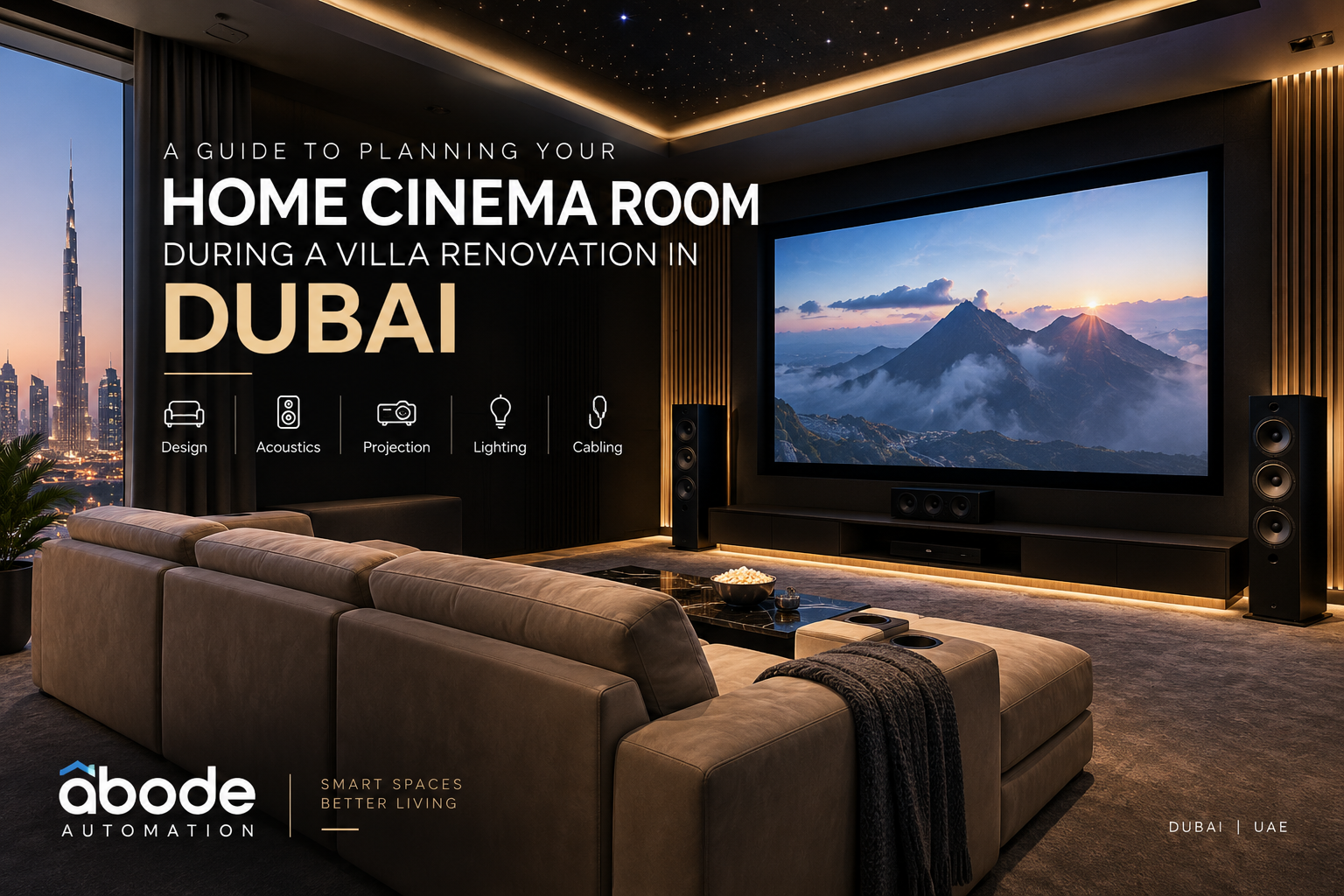
Planning the Room Before the Fit-Out
A home cinema is much easier to design properly when it is considered during the early stages of a villa renovation. Speaker locations, projector positioning, electrical points, network connections, lighting circuits and acoustic treatments can all affect the final interior.
Planning these elements before ceilings, walls and joinery are completed can reduce visible cabling and avoid unnecessary changes later in the project.
1. Start With the Room Layout
Before selecting a projector, screen or speakers, consider the size and shape of the room.
The seating position, viewing distance, ceiling height, doors and windows all influence how the cinema should be designed. A dedicated cinema room offers greater control, but a media room can also deliver an excellent experience when the equipment is planned around the space.
During a villa renovation, it is useful to decide early where the screen and main seating positions will be located.
2. Plan the Acoustics Early
Good picture quality is only part of a cinema experience. The way sound behaves inside the room is equally important.
Hard surfaces can create unwanted reflections and excessive reverberation. Acoustic treatments can help control these reflections and improve dialogue clarity and overall sound performance.
Acoustic planning should also work with the interior design. Panels, fabric finishes and other treatments can often be incorporated into walls and ceilings without making the room look like a recording studio.
3. Decide Speaker Positions Before Closing the Ceiling
Modern surround-sound systems can use speakers around the listener as well as overhead channels.
If the villa renovation includes ceiling work, speaker positions and cable routes should ideally be finalized before the ceiling is closed. This is particularly important when planning immersive audio systems such as Dolby Atmos.
Early coordination also helps architects, interior designers, MEP teams and AV specialists avoid conflicts with lighting fixtures, air-conditioning vents and other ceiling services.
4. Choose the Projection System Around the Room
Projector selection should not be based only on resolution.
Screen size, throw distance, room dimensions and ambient light all influence the type of projection system required. The projector position also needs suitable power, signal cabling, ventilation and mounting support.
These requirements are easier to accommodate while renovation work is still underway.
5. Create Different Lighting Scenes
Lighting has a major effect on the cinema atmosphere.
Instead of relying on a single lighting circuit, homeowners can consider separate lighting zones for ceiling lights, wall lights, step lighting and decorative features.
A lighting-control system can then create scenes such as Welcome, Movie, Interval and Cleaning. Motorized curtains or shades can also be integrated when external light needs to be controlled.
6. Don't Forget Cabling and Network Infrastructure
Even when many devices advertise wireless connectivity, a professionally planned cinema still benefits from the correct infrastructure.
Power, speaker cables, network connections and AV signal cables should be planned before finishing the walls and ceilings. Providing suitable cable pathways can also make future upgrades easier.
A reliable network is particularly useful for streaming services and connected control systems.
7. Coordinate the Cinema With the Interior Design
Home cinema technology does not need to dominate the room visually.
Speakers, acoustic treatments, lighting and equipment can be incorporated into the architectural and interior design when the teams coordinate early.
For homeowners renovating a villa, working with an experienced integrator for home cinema and acoustic solutions can help bring the AV system, acoustics, lighting and control together as one coordinated design.
Final Thoughts
The best time to plan a home cinema is usually before the renovation reaches the finishing stage. Decisions about room layout, acoustics, speakers, projection, lighting and cabling are much easier to implement when they are considered alongside the architectural and interior design.
Early planning can result in a cleaner installation, better integration and a cinema room that feels like part of the villa rather than technology added after construction.