Guest article
Off-Plan Villas vs Townhouses in Dubai: What Buyers Should Compare in 2026
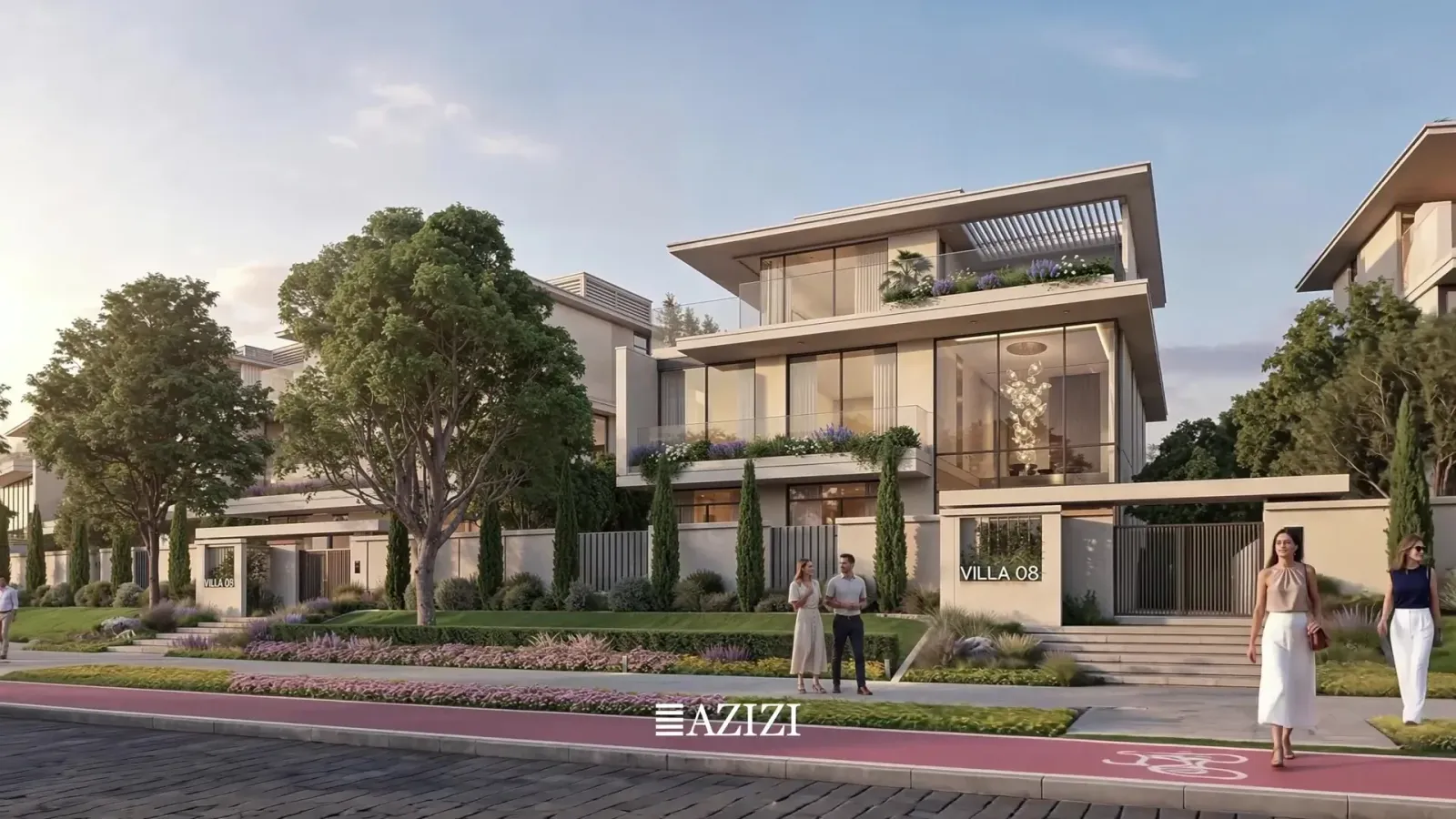
Dubai’s off-plan market gives buyers far more choice than simply deciding between an apartment and a house. For buyers looking for more space, two categories repeatedly come up: villas and townhouses.
The difference is not only the number of bedrooms or the size of the plot. Off plan Villas and townhouses can differ considerably in entry price, payment schedule, community structure, maintenance requirements, future supply and the type of buyer or tenant they are likely to attract.
OffPlan Insider currently tracks more than 150 off-plan projects across the UAE, including a substantial selection of villas and townhouses. That makes comparison increasingly important: the question is rarely whether there are options available, but which type of property fits the buyer’s budget, timeline and reason for purchasing.
This guide explains what to compare before choosing between off plan villas in Dubai and off plan townhouses in Dubai.
Villa or townhouse: what is the basic difference?
A villa is generally a standalone or semi-detached home with more private outdoor space and greater separation from neighbouring properties.
A townhouse usually forms part of a row or cluster of connected homes. It can still offer multiple bedrooms, gardens, parking and access to the same community amenities as villas, but typically on a smaller plot.
In Dubai’s newer master-planned developments, however, the distinction is not always straightforward.
A large townhouse in one development may provide more internal space than an entry-level villa elsewhere. Some townhouse communities offer four- and five-bedroom properties, while certain villa projects begin with relatively compact layouts.
That means buyers should compare actual specifications rather than making a decision based purely on the label attached to the property.
Look at:
built-up area
plot area
number of bedrooms
number of parking spaces
distance between neighbouring homes
garden size
community facilities
service charges
expected handover
payment schedule
These factors often tell you more than whether the brochure calls the property a villa or townhouse.
Why buyers consider off-plan villas in Dubai
The strongest argument for a villa is usually space.
A villa can make more sense for buyers who expect to occupy the property themselves, particularly families looking for additional bedrooms, private gardens, larger kitchens, home offices or greater separation from neighbouring properties.
The category also covers a wide price range.
Dubai’s off-plan villa market now extends from relatively accessible homes in developing suburban communities to large luxury residences in waterfront, golf and low-density developments.
This makes off plan villas in Dubai relevant to several types of buyers rather than only the ultra-luxury segment.
For an investor, however, more space does not automatically mean a better investment.
A villa may require a larger initial commitment, carry higher absolute maintenance costs and appeal to a narrower tenant pool than a smaller property. Buyers therefore need to compare the purchase price against likely end-user demand in that particular location.
The useful question is not:
Is a villa better than a townhouse?
It is:
Does the additional land, privacy and space justify the additional cost in this particular project?
Why off-plan townhouses attract buyers
Townhouses often occupy the middle ground between apartments and detached villas.
They can give buyers many of the features associated with a family house—multiple bedrooms, outdoor space, parking and access to parks or community facilities—while keeping the total purchase price below that of a comparable standalone villa.
That makes off plan townhouses in Dubai particularly relevant for buyers moving from apartments into their first family home.
They can also appeal to investors looking at family-oriented communities where tenants may want a house but cannot or do not want to pay the rent associated with a large detached villa.
But townhouse projects need to be compared carefully.
Density can vary considerably. Two developments offering similarly sized three-bedroom townhouses may feel completely different depending on plot dimensions, street widths, landscaping, amenity provision and how many homes are being delivered within the wider master plan.
When evaluating a townhouse, look beyond the floor plan.
Ask how the entire community is designed.
Entry price matters—but it is only the beginning
Buyers naturally start with the advertised property price.
That is useful, but it does not tell you how much cash you actually need or when you will need it.
An AED 2 million property with a heavily deferred payment schedule can create a very different cash-flow requirement from an AED 2 million property where most of the purchase price must be paid during construction.
This is why comparing a Dubai property payment plan can be just as important as comparing the price itself.
Off-plan plans are commonly expressed as percentages—for example, an amount due during construction followed by another amount at handover.
OffPlan Insider’s analysis of current UAE projects has identified multiple structures rather than one standard schedule. The site currently tracks plans ranging from relatively back-loaded structures to plans requiring a considerably larger share of the price before completion.
For buyers, this changes the affordability calculation.
Consider two homes with the same headline price.
One may require substantially more capital over the next two years. The other may require less during construction but leave a much larger amount payable at handover.
Neither structure is automatically better.
The right one depends on where your money will come from and when it will be available.
How to compare a Dubai property payment plan properly
Do not stop at the headline split.
A useful payment-plan comparison should answer at least five questions.
1. How much is required to reserve the property?
The booking amount determines your immediate cash requirement.
It should be considered alongside registration and other transaction-related costs rather than viewed in isolation.
2. How much will you pay before handover?
This is particularly important for buyers funding the purchase from income or investments rather than holding the entire purchase price in cash.
Calculate the actual dirham amount rather than thinking only in percentages.
3. When are the instalments due?
Some schedules are tied to dates, while others can be linked to construction milestones.
A buyer needs to understand the trigger for every payment.
4. How much remains at handover?
A payment plan that appears easy during construction may create a much larger final obligation.
If your strategy depends on financing at handover, examine that assumption before reserving the property.
5. Is anything payable after handover?
A genuine post-handover plan changes the cash-flow profile again.
Do not assume that a property marketed with a flexible payment structure necessarily includes a post-handover period. Check the actual schedule supplied for the unit.
OffPlan Insider’s payment-plan calculator can be useful here because it converts percentage structures into actual amounts and dated instalments rather than leaving the buyer to interpret a headline such as 60/40.
Villas and townhouses can have very different cash-flow requirements
Suppose a buyer is comparing:
Property A: AED 2.5 million townhouse
Property B: AED 3.2 million villa
At first glance, the townhouse requires AED 700,000 less.
But assume the townhouse requires 70% before handover while the villa requires 50%.
The construction-period commitment becomes:
Townhouse: AED 1.75 million
Villa: AED 1.60 million
Despite being the cheaper property overall, the townhouse would require more money before completion in this simplified example.
This is why buyers should compare price and payment structure together.
It also explains why filtering properties purely by headline price can hide potentially suitable alternatives.
Compare the developer as carefully as the property
The quality of the house is only one part of an off-plan purchase.
The developer determines the construction process, documentation, communication, handover experience and ultimately much of the finished environment.
Before buying, research:
completed developments
previous handovers
construction progress
project registration
escrow arrangements
specification quality
changes between launch material and completed projects
after-sales processes
Dubai Land Department requires off-plan projects to go through project registration and escrow-account processes. DLD also provides for the registration of off-plan unit sales through the provisional register.
DLD explains that money collected from buyers of off-plan units is deposited into the relevant project escrow account.
These protections matter, but they do not remove the need to investigate the individual project and developer before purchasing.
Location should be judged at handover—not only today
Many off-plan villa and townhouse communities are located in areas that are still developing.
This can create opportunity, but buyers need to distinguish between what exists today and what is planned.
When comparing locations, investigate:
existing road access
planned road connections
schools already operating nearby
planned schools
supermarkets and daily retail
healthcare
parks and recreation
distance to employment centres
competing future housing supply
future phases of the same master development
A location that currently feels remote may look very different by a 2029 or 2030 handover.
The opposite can also happen: an area marketed as low-density at launch may ultimately contain several future phases.
Look at the full master plan rather than only the immediate cluster surrounding the property.
What investors should compare
Investors should approach villas and townhouses differently from buyers choosing a home for themselves.
Start with the likely future tenant or purchaser.
For a townhouse, that might be a family looking for a three- or four-bedroom home within a particular annual rental budget.
For a larger villa, the potential tenant pool may be smaller but capable of paying considerably more for privacy, plot size or location.
Useful investment questions include:
Who is the likely tenant?
What competing homes will exist by handover?
How many similar units are planned?
What is the total acquisition cost?
What service and maintenance costs are likely?
Is the property differentiated by plot, view or location?
How much capital is tied up before completion?
What would make a future buyer choose this home over another one nearby?
Avoid treating projected rental yield or capital growth as guaranteed.
Off-plan property is a forward-looking purchase. Both market conditions and competing supply can change significantly before handover.
What end users should compare
Someone intending to live in the home has a different set of priorities.
The floor plan becomes more important.
Look closely at:
usable bedroom sizes
storage
kitchen configuration
maid's room or utility space
garden usability
parking
privacy
orientation
proximity to parks
walking routes
schools
expected community completion
A slightly smaller home with a better layout can be more useful than a larger property with poorly distributed space.
Likewise, a townhouse positioned next to a park could be more suitable for a family than a detached villa beside a major road.
Do not buy the category. Buy the individual home.
Villa vs townhouse: a practical comparison
Factor | Off-plan villa | Off-plan townhouse |
|---|---|---|
Entry price | Usually higher | Often lower |
Plot | Generally larger | Generally smaller |
Privacy | Usually greater | More shared boundaries |
Internal space | Often larger | Can still be substantial |
Buyer profile | Families, luxury/end users, investors | Families, first-time house buyers, investors |
Maintenance | Potentially higher | Potentially lower |
Community lifestyle | Often lower density | Often more compact |
Payment plan | Project-dependent | Project-dependent |
Investment case | Depends on scarcity and demand | Depends on affordability and family demand |
The most important row in the table is the payment plan: it is project-dependent in both cases.
There is no universal villa payment structure and no universal townhouse structure.
So which should you buy?
There is no single answer.
Choose based on the constraint that matters most.
If privacy, plot size and long-term family use dominate the decision, a villa may deserve more attention.
If the priority is accessing a family-oriented community at a lower total purchase price, a townhouse may provide a stronger fit.
If the purchase is primarily an investment, compare both categories instead of assuming one will perform better.
And in every case, analyse three things together:
the property, the project and the payment schedule.
A good off-plan purchase is not simply the home with the most attractive launch price. It is one where the price, construction timeline, developer, location, supply and payment obligations make sense together.
Before reserving, compare currently available projects, verify the latest developer information and turn the advertised payment percentages into actual dirham commitments.
That is where a meaningful comparison begins.