Guest article
The Hidden Costs of Ignoring Kitchen Equipment Maintenance
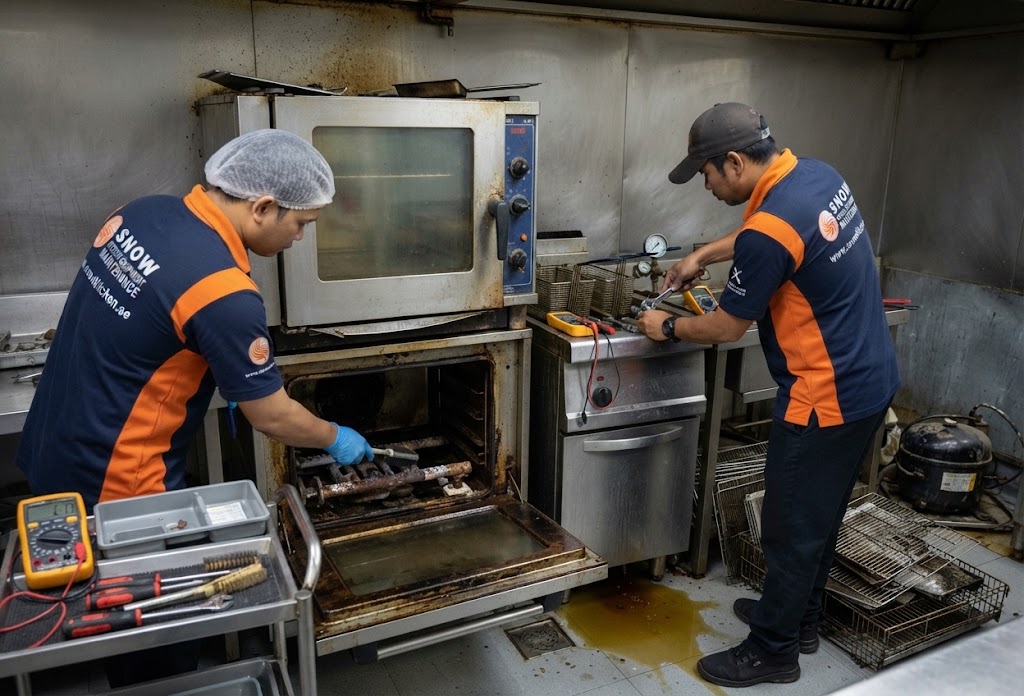
At Snow Kitchen Equipment Maintenance, we help restaurants, hotels, cafés, catering companies, and other commercial food establishments across the UAE maintain their kitchen equipment and reduce unnecessary downtime.
1. Unexpected Equipment Breakdowns
One of the biggest hidden costs of ignoring maintenance is sudden equipment failure.
A refrigerator may stop cooling, an oven may stop heating, or a dishwasher may suddenly become unusable during a busy service period. Unexpected breakdowns can interrupt kitchen operations and require urgent repairs.
A small maintenance issue today can become a major breakdown tomorrow.
Regular kitchen equipment maintenance and repair can help identify potential problems before they cause significant disruption.
2. Higher Energy Consumption
Poorly maintained equipment often has to work harder to achieve the same results.
For example, a refrigeration system with dirty components or damaged seals may need to run for longer periods to maintain the required temperature. Cooking equipment can also become less efficient when components are worn or dirty. Over time, unnecessary energy consumption can increase operating costs.
3. Shorter Equipment Lifespan
Commercial kitchen equipment represents a significant investment.
When equipment is not properly maintained, components can experience unnecessary wear and tear. Small problems can place additional stress on motors, heating elements, compressors, electrical components, and other parts. Eventually, equipment may need to be replaced earlier than expected.
Regular maintenance helps protect the investment your business has already made in its kitchen equipment.
4. Expensive Emergency Repairs
Ignoring warning signs can turn a simple repair into a much larger one.
A worn component that could have been replaced during routine maintenance may eventually damage other parts of the equipment. Emergency repairs can also involve additional costs because the business needs immediate assistance.
Preventive maintenance allows businesses to identify potential problems earlier and plan repairs before they become emergencies.
5. Food Waste and Product Loss
Equipment failure can affect stored food.
A malfunctioning refrigerator, freezer, or cold room may fail to maintain appropriate temperatures, potentially affecting food quality and increasing waste. For restaurants and food businesses, losing stored ingredients can represent a significant unexpected expense.
Snow Kitchen provides cold room installation and maintenance solutions to help businesses maintain reliable cold-storage systems.
6. Reduced Kitchen Productivity
Kitchen equipment directly affects how quickly staff can prepare and serve food.
When an oven takes too long to heat, a fryer performs inconsistently, or a dishwasher requires multiple cycles, employees may spend more time completing routine tasks. This can slow down the entire kitchen workflow.
Reliable equipment helps staff work efficiently and maintain consistent service during busy periods.
7. Increased Safety Risks
Neglected equipment can create potential safety concerns.
Electrical faults, gas-related problems, overheating components, leaks, and damaged equipment can create hazards for kitchen employees. Regular professional inspections can help identify potential problems before they become more serious.
Equipment maintenance is not only about saving money—it is also about maintaining a safer working environment.
8. Poor Ventilation Performance
Commercial kitchens produce heat, smoke, steam, and grease throughout the day.
When exhaust and ventilation systems are not properly maintained, airflow can become restricted and the kitchen environment may become less comfortable. Dirty filters, fans, hoods, and duct systems can affect ventilation performance.
Snow Kitchen provides HVAC system cleaning services to support the maintenance of commercial HVAC and ventilation systems.
9. Inconsistent Food Quality
Kitchen equipment needs to perform consistently to support consistent food preparation.
An oven with inaccurate temperature control, a fryer that cannot maintain proper heat, or a refrigerator with fluctuating temperatures can affect food quality. When equipment performance changes, kitchen staff may have to constantly adjust cooking times and processes.
Regular maintenance helps identify equipment performance issues before they have a greater effect on daily operations.
10. Electrical Problems Can Become More Serious
Commercial kitchens rely heavily on electrical equipment.
Repeated circuit trips, unusual smells, damaged wiring, overheating, or equipment shutting down unexpectedly should not be ignored. These problems may indicate an electrical fault that requires professional inspection.
Snow Kitchen also provides commercial electrical services to help businesses address electrical requirements and equipment-related issues.
If electrical equipment is behaving differently, professional inspection is safer than repeatedly resetting it and hoping the problem disappears.
11. Disrupted Customer Service
Equipment problems can eventually affect customers.
If a restaurant cannot prepare certain menu items because an oven or fryer has failed, service may become slower and less consistent. Longer waiting times and unavailable menu items can affect the overall customer experience.
Maintaining essential kitchen equipment helps businesses keep their operations running smoothly.
12. More Frequent Equipment Replacement
When maintenance is consistently ignored, equipment may reach the point where repair is no longer practical.
Replacing commercial kitchen equipment can be significantly more expensive than maintaining it properly throughout its working life. Preventive maintenance can help businesses identify problems earlier and determine whether equipment can be repaired before replacement becomes necessary.
13. Difficulty Planning Business Expenses
Unexpected equipment failures make budgeting more difficult.
A restaurant may suddenly need to pay for emergency repairs, replacement parts, food losses, or even temporary equipment. A regular maintenance schedule provides businesses with better visibility into the condition of their equipment and upcoming maintenance needs.
Planned maintenance makes equipment expenses more predictable.
14. Why Preventive Maintenance Matters
Preventive maintenance focuses on identifying and addressing potential problems before they become major failures.
It may include:
Equipment inspections
Cleaning
Temperature checks
Component testing
Lubrication
Filter maintenance
Electrical inspections
Calibration
Seal inspections
Replacement of worn components
A structured maintenance program can help reduce the hidden costs associated with equipment neglect.
15. Create a Regular Maintenance Schedule
Every commercial kitchen should have a maintenance schedule based on its equipment, operating hours, and usage.
Daily cleaning and basic checks can be handled by kitchen staff, while professional technicians can perform more detailed inspections and servicing. High-use kitchens may require more frequent professional maintenance.
Keeping maintenance records can also help businesses track equipment condition and identify recurring problems.
16. Why Professional Maintenance Makes a Difference
Commercial kitchen equipment can contain complex electrical, mechanical, refrigeration, and heating components.
Professional technicians can inspect equipment more thoroughly, identify underlying problems, and recommend appropriate repairs or servicing.
Professional maintenance can help businesses:
Reduce unexpected downtime
Improve equipment efficiency
Extend equipment lifespan
Reduce emergency repair costs
Improve kitchen safety
Maintain consistent performance
Protect equipment investments
17. About Snow Kitchen Equipment Maintenance
Snow Kitchen Equipment Maintenance provides professional commercial kitchen equipment installation, repair, and preventive maintenance services across the UAE.
We support restaurants, hotels, cafés, catering companies, and other commercial food establishments with solutions for kitchen equipment, refrigeration systems, cold rooms, HVAC, electrical systems, and other essential kitchen requirements.
Regular maintenance can help businesses avoid many of the hidden costs associated with neglected equipment and keep their kitchens operating efficiently.