Guest article
What Makes a Reliable Road Contractor Essential for Dubai’s Growing Infrastructure?
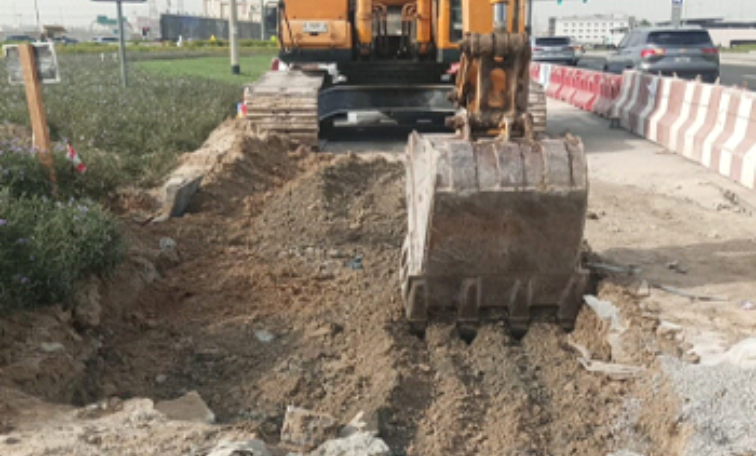
Dubai’s roads are more than transportation routes. They connect residential communities, commercial districts, industrial zones, airports, tourism destinations, and major business hubs across the emirate. With continuous urban development, every new road project requires careful planning, accurate engineering, quality materials, and strict attention to safety. Choosing Rta Approved Road Contractors In Dubai can therefore play an important role in ensuring that infrastructure projects meet the required technical and regulatory expectations. At the same time, supporting infrastructure such as Pipeline Construction In Dubai contributes to the efficient development and connectivity of modern urban areas.
Why Does Road Infrastructure Matter So Much in Dubai?
Dubai experiences rapid development throughout the year. New buildings, residential communities, warehouses, hotels, shopping destinations, and industrial facilities often require supporting road networks.
A properly designed road does more than provide a smooth driving surface. It must accommodate traffic volumes, withstand heavy vehicles, manage drainage, support pedestrian movement, and remain safe under demanding weather conditions.
Poor planning can result in surface deterioration, traffic disruptions, water accumulation, or expensive repairs. For this reason, road development requires an integrated approach from the initial design stage through construction and maintenance.
Connecting Communities and Commercial Areas
Road networks help businesses operate efficiently by providing reliable access for employees, customers, delivery vehicles, and logistics services. In growing areas, new access roads can also improve connectivity between established neighborhoods and newly developed zones.
For commercial projects, efficient road access can influence convenience, delivery schedules, and overall site accessibility. A well-planned network supports smoother movement while reducing unnecessary congestion.
What Should You Look for in a Road Construction Partner?
Selecting a contractor should involve more than comparing project prices. Technical capability, experience, safety procedures, workforce expertise, equipment, and quality-control practices all deserve attention.
Experienced Road Construction Companies In Dubai generally understand the challenges involved in developing infrastructure within a densely developing urban environment. Their responsibilities can cover earthworks, pavement construction, drainage coordination, road geometry, kerbs, access routes, and related infrastructure elements.
Technical Planning Comes First
A successful project begins long before machinery reaches the site.
Engineers typically assess soil conditions, existing utilities, expected traffic, drainage requirements, site levels, and surrounding infrastructure. These factors influence pavement design and construction methodology.
Detailed planning can also help identify potential conflicts before they become expensive problems. For example, underground utilities may need to be protected or relocated before excavation begins.
Quality Materials Make a Difference
The performance of a road depends heavily on the materials used throughout its construction.
Aggregates, asphalt mixtures, sub-base materials, concrete elements, and other components must be selected according to the project's engineering requirements. Consistency in material quality can improve durability and reduce premature deterioration.
Quality checks should continue throughout construction rather than being performed only after completion. Testing compaction, material properties, pavement thickness, and surface quality can help identify problems early.
How Does Construction Quality Affect Long-Term Performance?
A road may appear complete when the final surface is laid, but its long-term performance depends on what lies beneath it.
Proper ground preparation and compaction provide a stable foundation. If the underlying layers are weak or poorly compacted, settlement and cracking may eventually appear on the surface.
Drainage is another important consideration. Water can significantly affect pavement performance when it enters unsuitable areas or remains trapped beneath the surface.
Managing Dubai’s Environmental Conditions
The local climate presents particular challenges for infrastructure. High temperatures can place additional stress on pavement surfaces, while dust and occasional heavy rainfall can affect surrounding areas.
Construction methods should therefore account for local environmental conditions. Appropriate materials, adequate drainage, correct installation procedures, and regular inspections can collectively improve service life.
Why Safety Should Remain a Priority?
Road construction often takes place close to active traffic, pedestrians, businesses, and residential communities. Without effective safety management, construction activities can create unnecessary risks.
Traffic diversions, warning signs, barriers, lighting, pedestrian routes, and controlled access points may all be necessary depending on the project.
Workers also require appropriate protective equipment and clearly defined site procedures. A strong safety culture protects both construction teams and members of the public.
Minimizing Disruption During Development
Road projects can temporarily affect traffic flow. Strategic scheduling and phased construction can help reduce inconvenience.
Where possible, work may be organized around traffic patterns, existing access requirements, and nearby commercial activity. Communication between project stakeholders is equally important because unexpected changes can create delays.
Can Proper Maintenance Extend a Road’s Service Life?
Even a well-constructed road requires ongoing attention.
Small cracks, surface wear, drainage issues, damaged kerbs, and faded markings can become larger problems when ignored. Regular inspections allow maintenance teams to identify deterioration before extensive reconstruction becomes necessary.
Preventive maintenance is often more efficient than waiting until serious structural damage develops. Depending on the condition, appropriate interventions may include localized repairs, resurfacing, crack treatment, drainage improvements, or surface renewal.
The Role of Modern Infrastructure Planning
Dubai's continued expansion means road infrastructure must adapt to changing requirements. Future projects may need to accommodate increasing traffic volumes, new developments, pedestrian facilities, public transport connections, and smart infrastructure.
Successful contractors must therefore combine traditional construction knowledge with accurate project planning and modern engineering practices.
Digital surveying, project monitoring, geographic information systems, and advanced testing methods can improve accuracy and coordination when appropriately applied.
Building Roads for the Future
A dependable road network supports much more than daily transportation. It contributes to economic activity, community accessibility, logistics efficiency, and the overall functionality of an expanding city.
The strongest projects are built around careful planning, suitable materials, competent workmanship, safety management, and long-term maintenance considerations. Selecting the right construction partner can help project owners avoid unnecessary delays while achieving infrastructure that performs reliably over time.
Conclusion
Dubai's fast-moving development places increasing demands on its road network. From initial surveys and groundwork to pavement installation and long-term upkeep, every stage influences the final result. A professional approach to engineering, construction quality, safety, drainage, and maintenance can create roads that remain dependable despite heavy use and demanding environmental conditions. Working with Rta Approved Road Contractors In Dubai can further support projects that require careful planning, quality execution, and compliance with relevant road standards.
For developers and infrastructure planners, the goal should not simply be to complete a road. It should be to create a durable, safe, accessible route that continues serving Dubai's evolving communities for years to come.